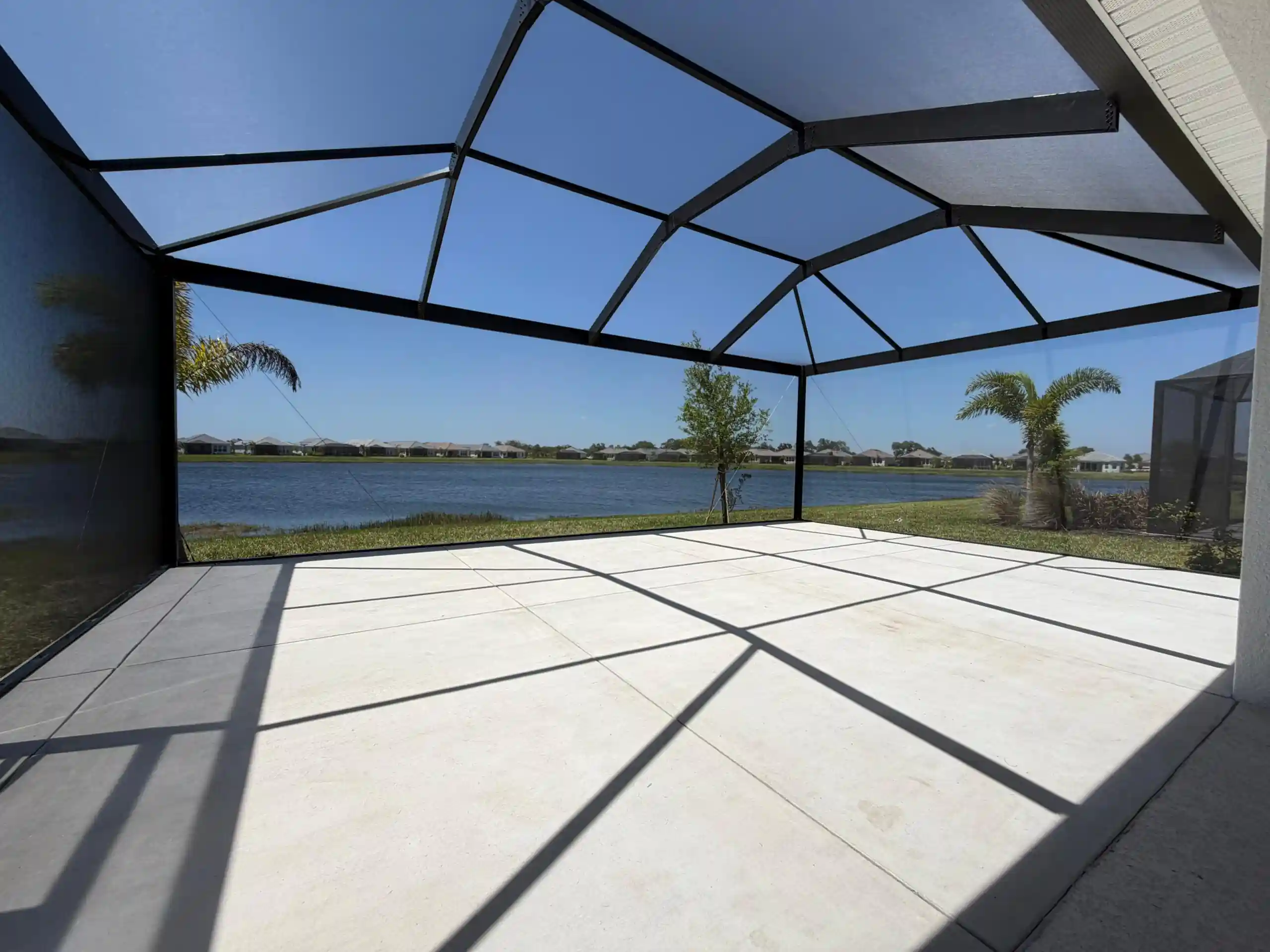
Lakefront Florida properties demand outdoor structures that protect from insects without blocking what made the property special in the first place — the view. This recently completed bird cage in Parrish, Florida shows what’s possible when every component is selected for that goal.
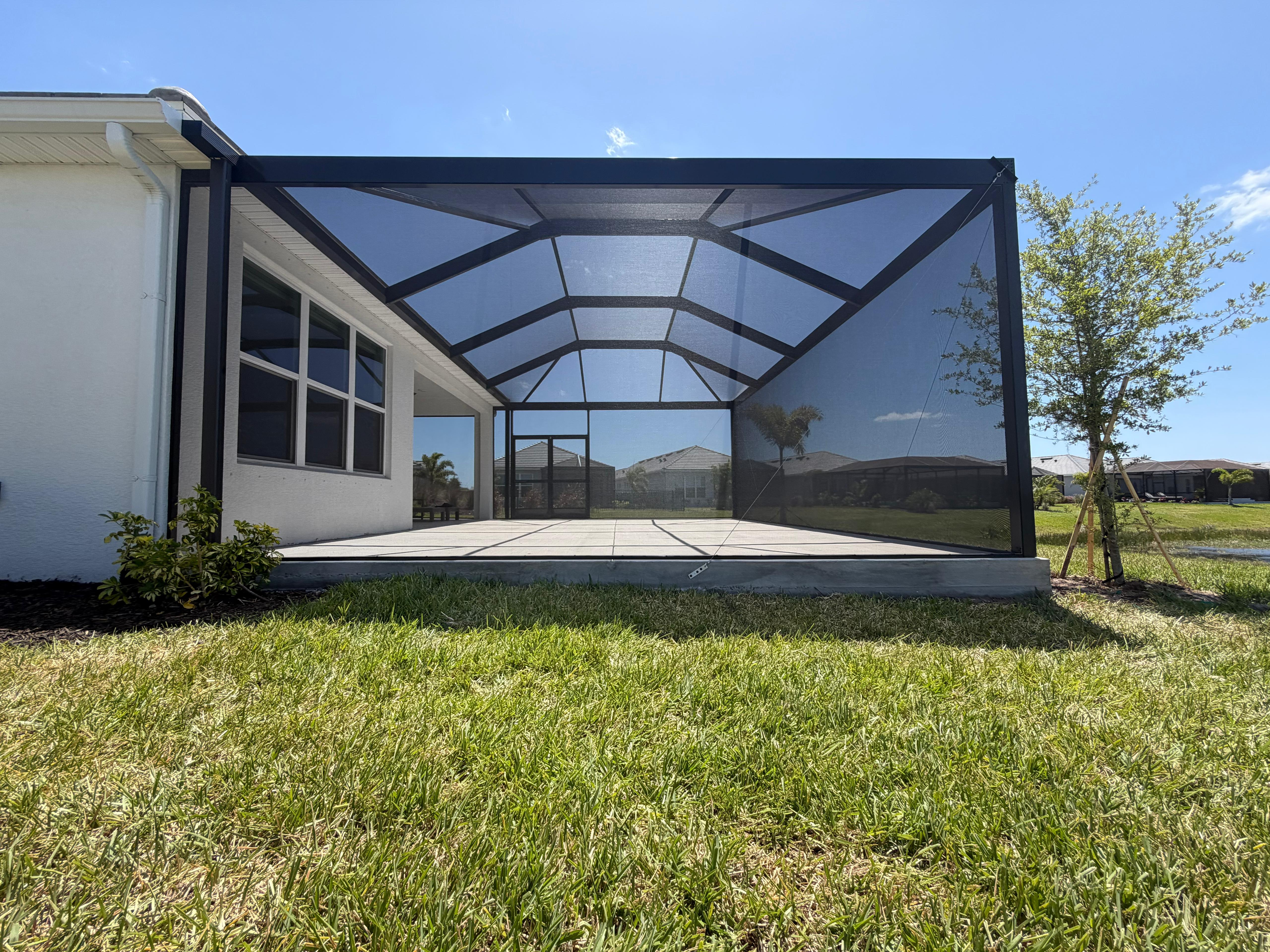
Our team finished this project for a homeowner whose backyard opens directly onto a community lake in Manatee County. The brief was straightforward: a fully screened outdoor area engineered for Florida weather, with as little visual interruption as possible. The result is a roughly 350-square-foot panoramic bird cage with a mansard roof, oversized structural posts, premium 20/20 fiberglass screen mesh, and a double-door entry — built and inspected in about two weeks.
Below: a closer look at the materials, the build choices, and what a project of this caliber typically costs in the Tampa Bay, Bradenton, and Sarasota corridor.
Project at a Glance
- Location: Parrish, Manatee County, FL
- Approximate footprint: ~350 sq ft
- Roof style: Mansard with steep upper slopes
- Frame color: Bronze-black powder-coated aluminum
- Screen mesh: 20/20 fiberglass (charcoal)
- Entry: Double swing door, ~60″ clear opening
- Side walls: Panoramic — no horizontal mid-rails
- View: Lakefront with western exposure
- Build duration: ~10 working days post-permit
- Investment tier: Medium ($12,000 – $18,000 range)
- Contractor: Top Tier Home Building Solutions (CGC1527718)
What Makes This Build Stand Out
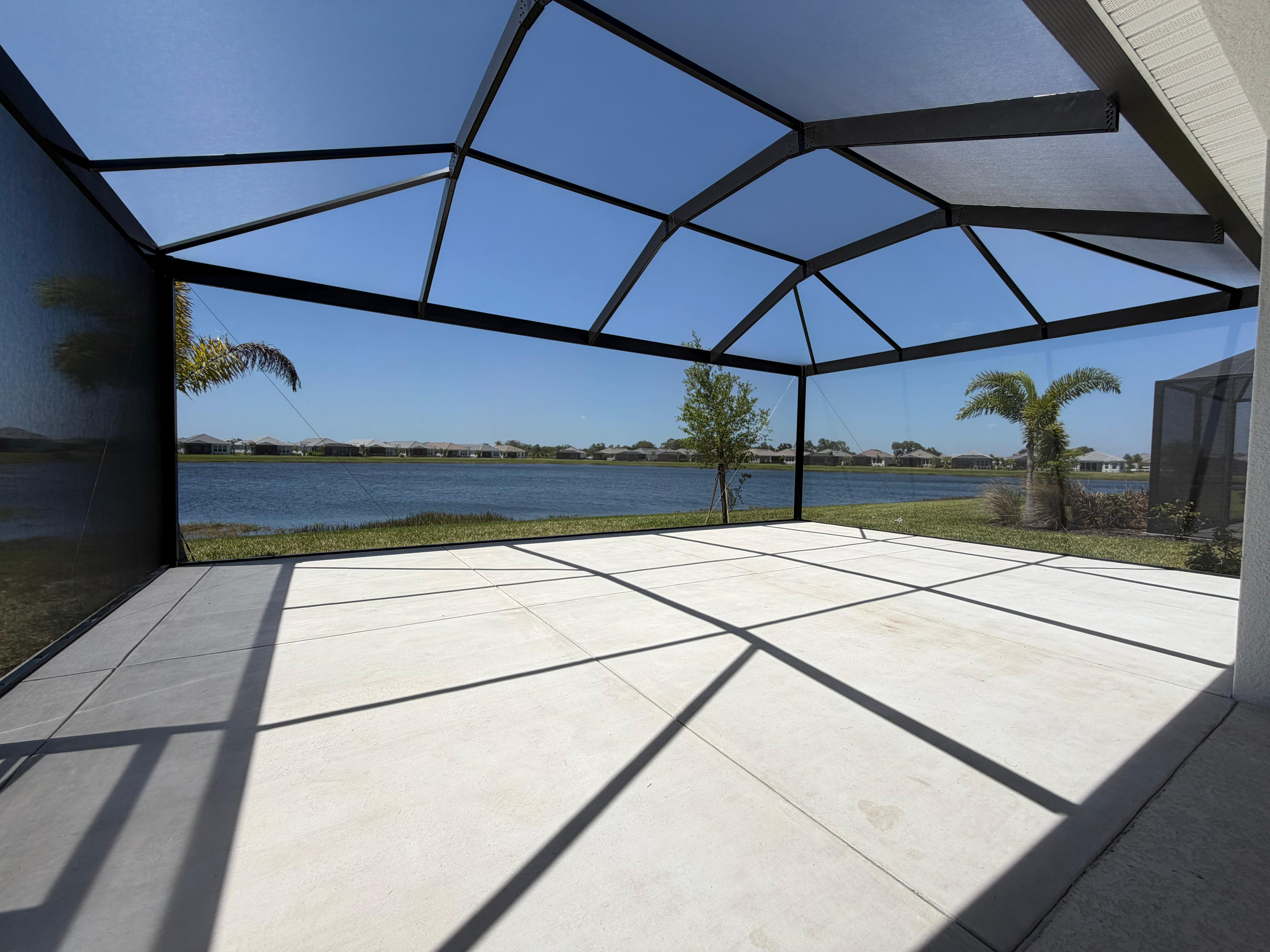
Four design choices separate this project from a basic bird cage build — and they’re worth understanding if you’re evaluating quotes from different Florida contractors.
1. Premium 20/20 Fiberglass Screen Mesh
The screen on this project is 20/20 charcoal fiberglass mesh — the industry standard for quality bird cages in Florida. The “20/20” designation refers to the weave: 20 threads per inch in each direction. That density blocks mosquitoes, no-see-ums, and pollen while preserving airflow and natural light.
What it gives you in practice:
- Effective insect protection — including the smaller Florida mosquito species
- Solar load reduction — meaningful, but not as aggressive as solar/SunTex options
- Visual transparency — charcoal mesh “disappears” against bright daylight, especially in lakefront builds where you want the view to dominate
- Long lifespan — 10–15 years in Florida sun before re-screening is needed, depending on UV exposure
For homeowners considering upgrades, options like Super Screen (7× tear resistance) or No-See-Um mesh (finer weave) are available. But for a clean lakefront enclosure where view clarity matters most, 20/20 charcoal hits the right balance of protection, transparency, and cost.
2. Oversized Structural Posts
Look at the corner posts in the photos. These aren’t standard 2″×2″ residential profiles — they’re heavier extruded aluminum posts engineered for two reasons:
Florida wind code. Manatee County requires bird cages to meet specific wind-load ratings depending on exposure and height. A panoramic enclosure with this much open span needs proportionally stronger uprights to pass the engineering review. Skimping on post size is the most common reason a permit gets kicked back.
Visual proportion. Oversized posts also look right against a single-story home with a tall mansard roof. Smaller posts on a structure this size would look skeletal. The thicker profile reads as solid and intentional from both inside and outside — which matters when the enclosure is the centerpiece of your backyard.
The trade-off is cost — heavier extrusions are typically 15–25% more expensive than standard profiles. On a build of this scale, undersized framing simply isn’t an option.
3. Panoramic Side Walls (No Horizontal Mid-Rails)
This is the detail most homeowners don’t know to ask about — and it’s the one that defines whether a bird cage feels open or boxed in.
In a standard build, side panels are split horizontally by an aluminum mid-rail at roughly chair-rail height. That rail is structurally convenient and cheaper to fabricate, but it cuts your sightline in half exactly where your eye lands when you sit down or look out.
A panoramic build runs the screen panel full-height — from kick plate to the top of the wall — with no horizontal interruption. On a lakefront property, this is non-negotiable. The lake view is the entire reason the homeowner bought the lot. Putting an aluminum rail across the middle of it would defeat the purpose.
The structural compensation comes from the oversized posts mentioned above, plus stainless steel cross-cables visible at the corners that handle lateral wind load.
4. Double-Door Entry
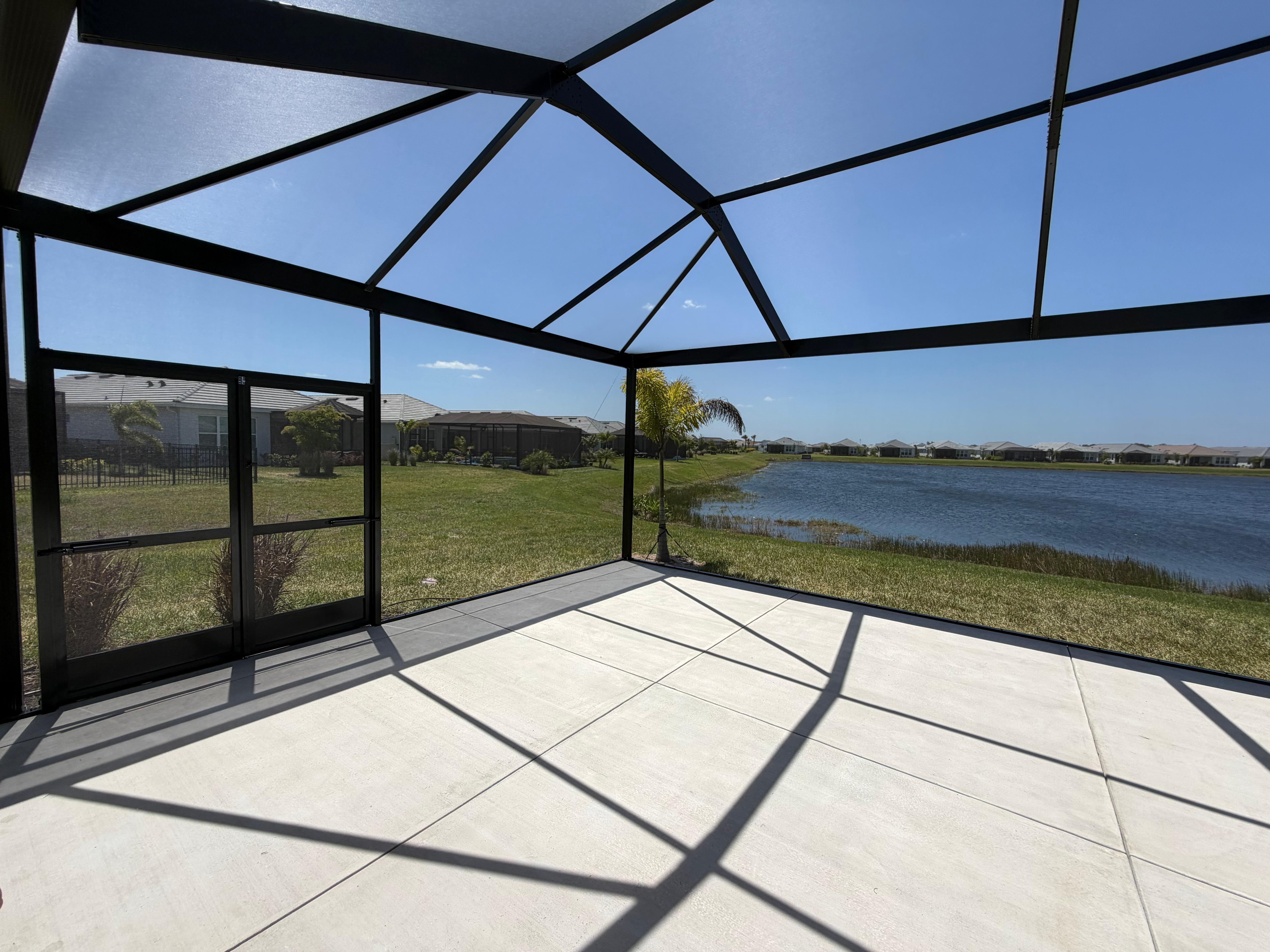
Most residential bird cages in Florida ship with a single 36-inch door. It works, but it’s the smallest thing about a structure that’s otherwise generous.
This build uses a double swing door — roughly 60 inches of clear opening when both panels are open. Why it matters:
- Furniture in and out. Outdoor sectionals, grills, large planters — they actually fit through
- Entertaining flow. When you’re hosting and people are moving between the indoor space and the cage, a double door eliminates the bottleneck
- Visual symmetry. A double door looks proportional against a wider rear wall; a single door tucked to one side looks like an afterthought on a large enclosure
- Future-proofing. If the homeowner ever adds a pool, hot tub, or larger outdoor kitchen, having a wider entry path already in place avoids an expensive retrofit
The hardware is heavy-duty self-closing hinges with magnetic latches — the same spec used on commercial enclosures.
Materials & Specifications
For homeowners and inspectors who want the technical detail:
- Frame: 6063-T5 architectural-grade extruded aluminum, AAMA 2603 powder-coated finish in bronze-black
- Hardware: 304 stainless steel screws and through-bolts (zinc-plated fasteners corrode within 5 years on coastal Florida builds)
- Screen mesh: 20/20 fiberglass, charcoal color, 0.0125″ diameter strands
- Wind rating: Engineered to Manatee County Building Code wind loads (140 mph design)
- Anchorage: Wedge anchors into existing concrete slab, with Tapcon backups at structural posts
- Roof: Mansard profile with steep upper slopes for added interior height and improved water runoff
- Cable bracing: Stainless steel cross-cables visible in the corners — engineered for lateral wind load on tall enclosures
Build Process Highlights
Permit & Engineering (1–3 weeks before build)
Before any aluminum touches the slab, Manatee County requires a stamped engineering drawing and a building permit. We handle the engineering submission and permit pull as part of the project. For a build like this, plan on 2–3 weeks of permit lead time depending on county workload.
Slab Inspection & Anchor Layout (Day 1)
The existing concrete slab is checked for cracks, slope (for drainage), and minimum thickness. Anchor points are marked along the perimeter — typically every 24 inches on the wall track, with additional anchors at every structural post location.
Frame Assembly (Days 2–6)
Wall plates are bolted down first, then corner posts, then horizontal beams, then the mansard roof structure. The roof goes up in sections — lower slope first, then the upper deck, then the apex. Stainless steel cable cross-bracing is installed last, before screening begins.
Screening (Days 7–9)
Each panel of screen is cut to size, splined into the channel groove, and tensioned. The screening team works one wall at a time, top to bottom, then moves to the roof panels. The roof is the most time-intensive step — every triangular bay between roof beams is screened individually.
Final Walkthrough & Inspection (Day 10)
The homeowner walks the structure with the install lead. Door operation, latch alignment, screen tension, and concrete cleanup are all confirmed. The county inspector visits separately to sign off on the permit.
What Does a Build Like This Cost in Florida?
Pricing for screen enclosures varies with size, materials, and site conditions. For a project at this spec level — panoramic walls, mansard roof, oversized posts, 20/20 mesh, double door, on an existing slab in the Tampa Bay, Bradenton, or Sarasota corridor — the typical 2026 ranges are:
- Small bird cage (up to 300 sq ft): $9,000 – $13,000
- Medium bird cage (300–500 sq ft): $12,000 – $18,000
- Large bird cage (500–800 sq ft): $17,000 – $26,000
- Custom or oversized (800+ sq ft, special architectural details): $25,000+
The Parrish project shown here falls in the medium tier. Your actual quote depends on the slab condition, roof complexity, screen upgrades, door count, and any electrical or lighting integration you want included.
For a more detailed cost breakdown by feature on a similar enclosure type, see our 2026 Pool Cage Cost Guide for Tampa Bay — many of the same materials and engineering principles apply.
Why a Bird Cage Style Fits Florida Lakefront Homes
Bird cages are uniquely suited to lakefront and water-view properties in Florida for three reasons:
1. They preserve the view in 360 degrees. Unlike a sunroom (which has solid walls and a solid roof) or a covered lanai (which has a solid roof), a bird cage uses screen on every face — including the roof. From inside, you see the sky directly, the trees overhead, and the water across the back. The frame becomes a thin grid, not a wall.
2. They handle Florida’s bug season without requiring AC. A sunroom requires HVAC to be useful in summer. A bird cage doesn’t — you get full airflow with full insect protection. For a lakefront property where mosquitoes and no-see-ums are a real evening concern, that matters every single day from May through October.
3. They’re lighter on the foundation than solid-roof structures. No solid roof means less weight, less wind load, and often a simpler engineering path. On a slab that wasn’t originally designed for a heavy addition, a bird cage is the path of least resistance.
There are situations where a different structure makes more sense. If you want year-round climate control or a TV-friendly enclosed space, a sunroom is the better fit. If you have a pool that needs full enclosure, a pool cage with screen sides and a screen roof is the standard. We’ve covered the differences in detail in our Sunroom vs. Lanai vs. Patio Enclosure Florida guide.
Maintenance & Warranty
A bird cage built to this spec is low-maintenance, but not zero-maintenance:
- Screen rinse: Twice a year, hose down the screens to remove pollen, dust, and lawn-clipping debris
- Frame inspection: Annually, check for any loose hardware, especially after hurricane season
- Re-screening: Plan for re-screening at year 10–15 — the aluminum frame outlasts the screen by decades
- Cable tension: The cross-bracing cables can be re-tensioned if needed, typically once every 3–5 years
Top Tier Home Building Solutions backs every bird cage build with a 10-year structural warranty on the aluminum frame and a 1-year workmanship warranty on screens, hardware, and installation.
For a complete year-round maintenance schedule, our Florida Pool Cage Maintenance Checklist applies almost identically to bird cages.
Frequently Asked Questions
How long does a 20/20 screen bird cage last in Florida?
The aluminum frame and hardware should last 25+ years if installed correctly with stainless steel fasteners. The 20/20 fiberglass screen typically lasts 10–15 years before re-screening is recommended, depending on UV exposure and storm activity. Properties with western or southern sun exposure see slightly faster screen wear than north-facing or shaded enclosures.
Do I need a permit for a bird cage in Manatee County?
Yes. Manatee County — and every county in Florida — requires a building permit for any screen enclosure attached to a residence. The permit ensures the structure meets local wind-load requirements. Top Tier Home Building Solutions handles permit applications and engineering submissions as part of the project, so you don’t deal with the county directly.
Does a dark frame get hot in the Florida sun?
Slightly — bronze-black powder-coated aluminum will be warmer to the touch than a white frame on a sunny day. But the difference is cosmetic, not structural. The powder coat is rated for the temperature swings, and the heat doesn’t transfer meaningfully to the interior space (the screen, not the frame, dominates the thermal experience). Most lakefront homeowners choose dark frames specifically because they read as “premium” against light-colored stucco and “disappear” visually against bright sky and water.
How wide can a panoramic bird cage span without an interior post?
For a standard mansard or hip roof bird cage with 20/20 screen and 6063-T5 aluminum, you can typically span 16–22 feet between corner posts without an interior post — depending on roof height and wind-load requirements for your specific county. Taller cages and higher wind zones reduce the maximum span. If you want a fully open span beyond 22 feet, the structural posts get noticeably heavier (and more expensive), but it’s achievable.
Can I add a bird cage to a home that already has a screened lanai?
Often, yes — but it depends on the existing lanai’s roof structure and slab condition. If your lanai has a solid roof, you can sometimes extend a bird cage off the lanai’s edge to add screened outdoor space without enclosing the existing lanai. We do a free site evaluation as part of the estimate process, where we look at how an addition would tie into your existing structure.
Get a Free Estimate for Your Florida Bird Cage
If you’re considering a bird cage, screen enclosure, or pool cage for your Florida home — whether in Parrish, Bradenton, Lakewood Ranch, Apollo Beach, Tampa, or anywhere across our Tampa Bay and Sarasota service area — we’d be glad to walk your property and give you a clear, written estimate. No high-pressure sales calls, no hidden fees.
- Licensed Florida General Contractor #CGC1527718
- 20+ years building exterior enclosures across the Tampa Bay metro
- Engineering, permitting, and HOA coordination handled in-house
- 0% financing available for qualifying projects
Request your free bird cage estimate →
Or call us directly at (813) 531-7170.
For more on what we offer, see our Bird Cage Services page, our coverage area in Manatee County, or our previous explainer guide What Is a Bird Cage Enclosure?.