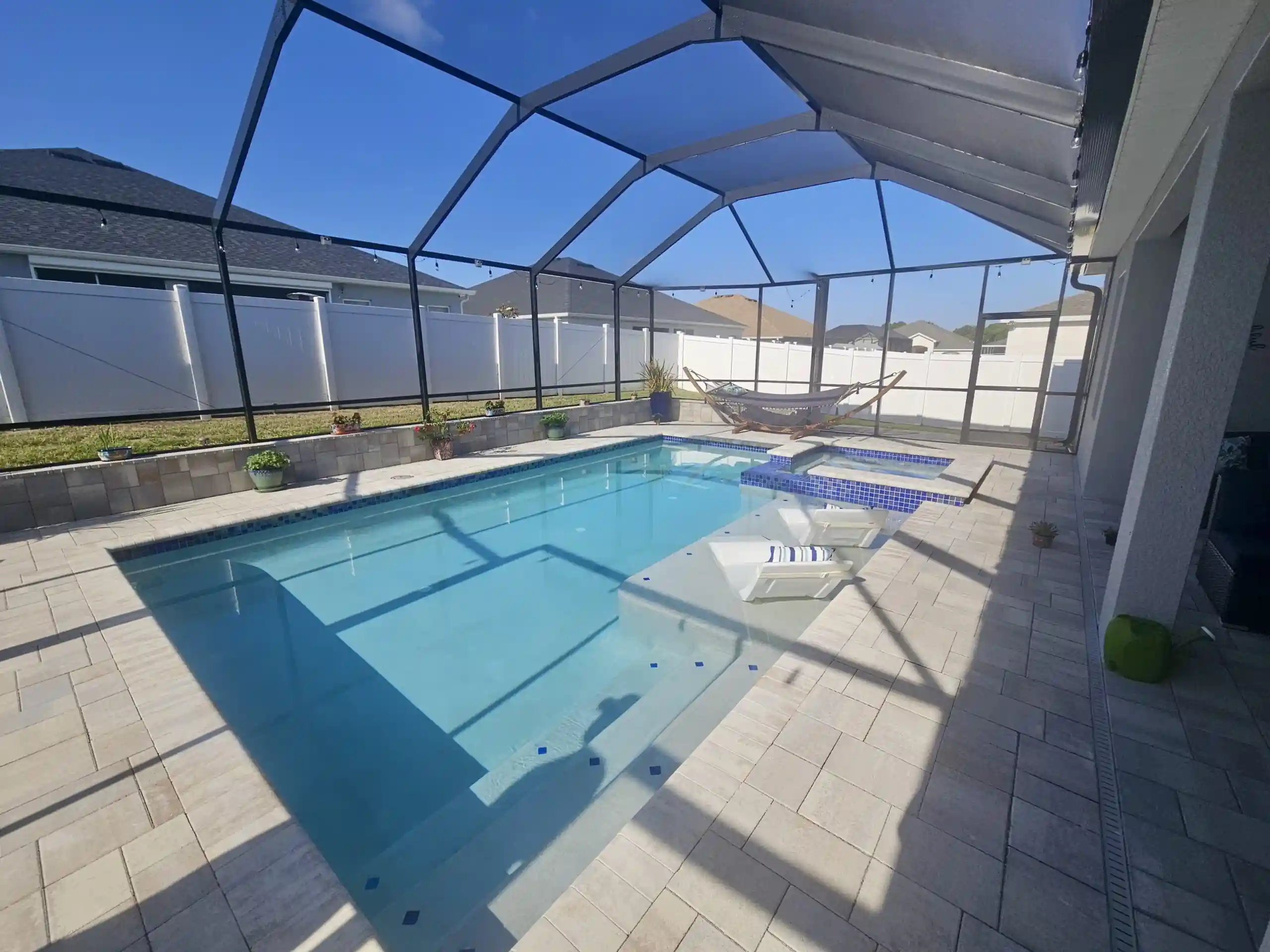
Quick answer: Three habits keep a Florida pool cage out of trouble: rinse the screens with fresh water every month (every two weeks within a mile of salt water), check the fasteners and spline twice a year, and walk the whole structure after every named storm. Professional cleaning runs $150–$350; catching a problem early is the difference between that and a $2,000–$5,000 rescreen.
| How often | What to do | Why it matters |
|---|---|---|
| Monthly | Rinse screens and frame with fresh water | Salt and pool chemistry corrode aluminum and degrade mesh |
| Monthly | Clear leaves and debris from the roof panels | Standing debris holds moisture and stretches the screen |
| Twice a year | Check screws, anchors, and spline; tighten what is loose | Loose fasteners elongate their holes and stop holding load |
| Yearly | Inspect base of every post for pitting or white corrosion | Post bases fail first, and they carry the wind load |
| After every storm | Walk the structure and photograph the beam connections | Movement up top is invisible from the patio — and it is what insurers ask to see |
A pool cage is a significant investment — and in Florida’s climate, regular maintenance is what keeps it looking great and lasting decades. Most pool cage damage that leads to expensive repairs is preventable with simple annual maintenance.
Why Pool Cage Maintenance Matters in Florida
Florida’s combination of intense UV exposure, high humidity, salt air (in coastal areas), and storm season creates an unusually harsh environment for aluminum and screen structures. Without regular attention, oxidized aluminum frames deteriorate faster, screen panels develop tears and UV degradation, standing water leads to corrosion, and loose fasteners become a safety hazard in high winds.
Annual Pool Cage Maintenance Checklist
1. Inspect All Screen Panels
Walk the perimeter and look at every panel. Look for tears, holes, or large sagging sections; screen pulling away from the frame (spline failure); discoloration or brittleness (UV degradation). Small holes under 1/4 inch can be patched temporarily. If 30% or more of your panels need work, a full re-screen is typically more cost-effective than patching.
2. Clean the Aluminum Frame
Oxidation appears as a white, chalky film. Clean with mild soap and water, a soft brush (never steel wool), and aluminum brightener for heavy oxidation. After cleaning, apply a coat of car wax to bare aluminum sections to slow future oxidation. In coastal areas within a mile of saltwater, do this twice per year.
3. Check All Hardware and Fasteners
Check screws at base plates and beam connections — tighten any loose ones. Lubricate door hinges and latches with WD-40 or silicone spray. Test that doors close fully and latch. Replace screen door sweeps if dragging or torn.
4. Inspect the Base and Slab Connection
Look for cracks in the concrete around the base plates, rust stains from base plates (galvanic corrosion), or any separation between the frame base and the slab. If you see significant rust or concrete cracking, have a licensed contractor assess it before hurricane season.
5. Clean the Gutters and Drainage
Most pool cages have gutters along the roof panels. Clean them of leaves, debris, and algae buildup at least once per year. Check that downspouts are clear and directing water away from the slab.
6. Check the Roof Panels
If your pool cage has translucent or solid roof panels, inspect them for cracks or holes in polycarbonate panels, loose or missing screws, and algae or moss buildup. Clean with diluted bleach solution (1:10).
7. Pre-Hurricane Season Inspection (May–June)
Before Florida’s June 1 hurricane season start: verify all screen panels are secure, confirm all roof panel screws are tight, check that the frame shows no visible bending or lean.
When to Re-Screen vs. Repair
Re-screening costs $2,000–$5,000 for a typical pool cage. Consider a full re-screen when more than 30% of panels show damage, the screen is 10–15 years old, or after any hurricane with sustained winds over 50 mph. A single torn panel costs $150–$350 to re-screen individually.
When to Call a Professional
DIY maintenance is fine for cleaning and minor hardware adjustments. Call a licensed contractor for any structural concerns (leaning, cracked welds, bent beams), base plate corrosion or concrete anchor failure, storm damage assessment, or re-screening. See our aluminum pool cage installation and rescreening service for Tampa Bay.
Frequently Asked Questions
How often should I re-screen my pool cage in Florida?
Every 10–15 years under normal conditions. After a significant hurricane, assess immediately — even without visible holes, screen may be stretched and weakened.
Can I pressure wash my pool cage?
You can lightly rinse the frame with a hose, but avoid pressure washing directly at screens — it will tear the mesh.
How do I remove algae from pool cage screens?
Mix 1 cup of white vinegar per gallon of water, apply with a soft brush, let sit 5 minutes, then rinse gently. For heavy algae on solid panels, a diluted bleach solution (1:10) works well.
Does homeowners insurance cover pool cage repairs?
Storm damage to pool cages is typically covered by the wind/hurricane component of your homeowners policy, subject to your deductible. Normal wear and maintenance are not covered.
Need a professional inspection or re-screen? Contact Top Tier for pool cage maintenance and repair services throughout the Tampa Bay area.
Related: if your inspection turns up frame damage rather than worn mesh, read pool cage replacement vs. rescreen before spending on new screen.
Sources: Florida Hurricane Preparedness Guide; Florida Division of Emergency Management — Protect Your Home.