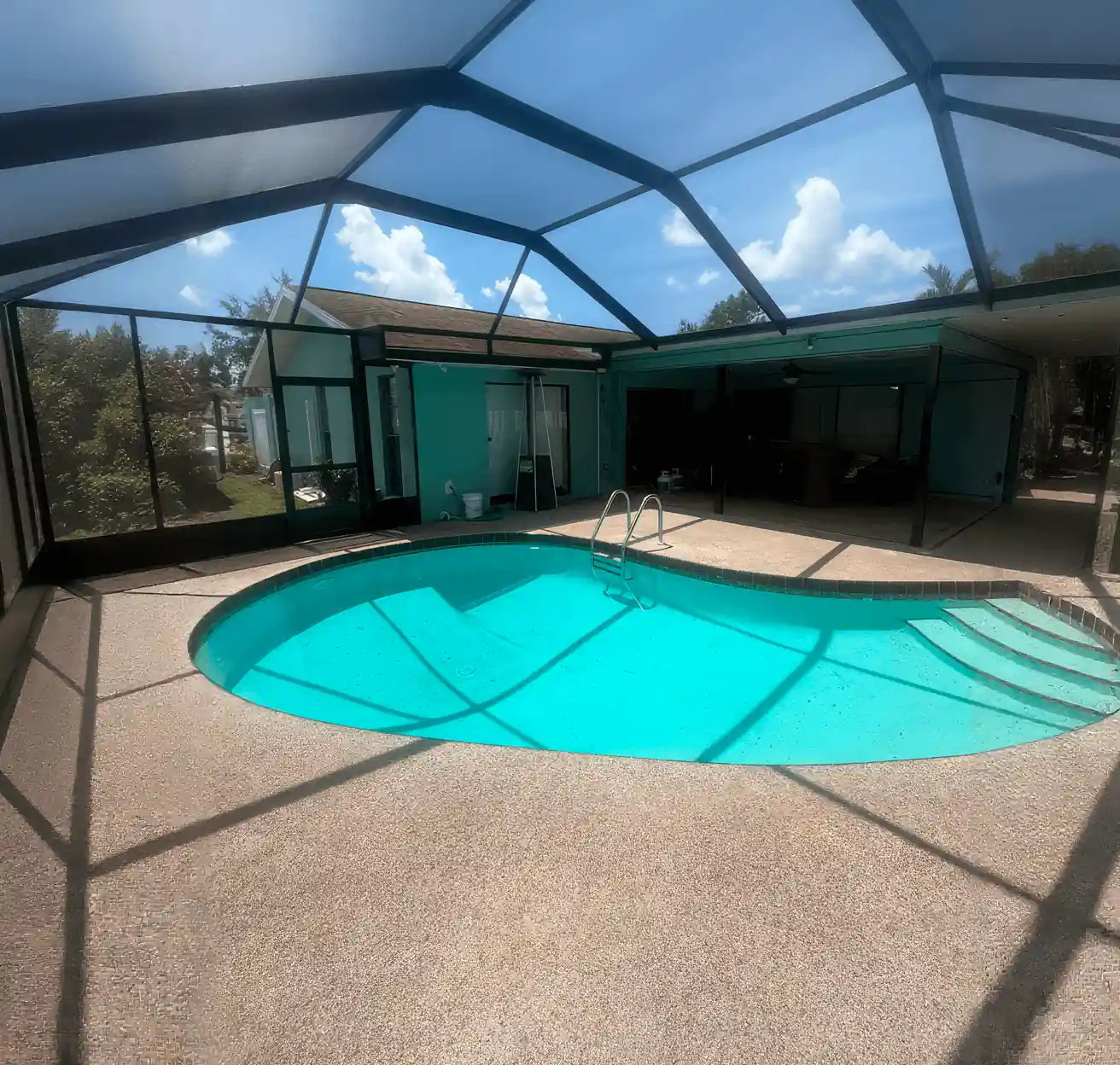
Quick answer: Pool cage installation in Tampa Bay runs $8,000–$25,000+ — about $8,000–$12,000 for a small enclosure, $12,000–$18,000 for a medium one, and $18,000–$25,000+ for large. Budget another $200–$800 for the permit and, if your deck is cracked or settled, $500–$2,500 for repairs before installation. Premium mesh adds $500–$3,000. Expect the screen to need replacing in 15–20 years ($2,000–$5,000); the aluminum frame lasts 30+.
| Enclosure size | Structure | Permit + likely deck work | Realistic all-in budget |
|---|---|---|---|
| Small — up to 800 sq ft | $8,000–$12,000 | $200–$3,300 | $9,000–$15,000 |
| Medium — 800–1,500 sq ft | $12,000–$18,000 | $200–$3,300 | $13,000–$21,000 |
| Large — 1,500+ sq ft | $18,000–$25,000+ | $200–$3,300 | $19,000–$28,000+ |
Mesh upgrades are additional: No-See-Um +$500–$1,500, Solar Screen +$1,000–$2,000, Super Screen +$1,500–$3,000.
If you’re a Tampa Bay homeowner researching pool cage installation, cost is likely your first question. Pool cage installation in Tampa Bay typically costs between $8,000 and $25,000, depending on the size of your pool, the style of enclosure, and the materials used. This guide breaks down every cost factor so you can budget accurately and avoid surprises. When you are ready to build, our pool cage contractors in Tampa Bay handle design, permitting, engineering, and installation.
What Is a Pool Cage?
A pool cage (also called a screen enclosure or pool enclosure) is an aluminum-framed structure with fiberglass screen panels that surrounds your pool area. In Florida, they serve a critical function: keeping out insects, debris, and UV rays while still allowing air circulation and natural light.
Unlike screened lanais, pool cages are typically taller to accommodate pool equipment and leave room for jumping and diving. They connect directly to the back of the home and are engineered to meet Florida’s strict wind-load requirements.
Pool Cage Cost in Tampa Bay: Price Breakdown by Size
The biggest driver of cost is square footage. Here’s a general range for the Tampa Bay area in 2026:
- Small pool enclosure (up to 800 sq ft): $8,000–$12,000
- Medium pool enclosure (800–1,500 sq ft): $12,000–$18,000
- Large pool enclosure (1,500+ sq ft): $18,000–$25,000+
These ranges include labor, materials, permits, and a standard aluminum frame with 20/20 screen mesh. Premium upgrades like Super Screen, picture-window panels, or decorative aluminum trim will add cost.
Key Factors That Affect the Final Price
1. Pool Shape and Layout
Rectangular pools are the most straightforward to enclose and typically fall at the lower end of the price range. Freeform, kidney-shaped, or L-shaped pools require custom framing, which adds labor time and material waste.
2. Screen Material
Standard 20/20 mesh is included in base pricing. Upgrades include:
- Super Screen: 7x stronger, resists tears, adds ~$1,500–$3,000
- No-See-Um mesh: Finer weave for smaller insects, adds ~$500–$1,500
- Solar Screen: Reduces glare and UV by up to 80%, adds ~$1,000–$2,000
3. Frame Style and Height
A standard hip-roof cage is the most common and economical option. A gable or cathedral roof style creates more interior height and a more architectural look but costs 15–25% more. Custom heights (e.g., to clear a slide or diving board) also increase cost.
4. Permits and Engineering
In Hillsborough, Pinellas, and Pasco counties, a pool enclosure permit is required. Permit fees typically run $200–$800 depending on the county. Any contractor you hire should pull the permit on your behalf — if they say a permit isn’t needed, that is a red flag.
5. Existing Deck Conditions
If your deck has cracked, heaved, or settled sections, they may need to be repaired before installation can begin. Deck repairs are separate from the enclosure cost and typically run $500–$2,500 depending on extent.
What’s Included in a Professional Pool Cage Installation?
A full-service installation by a licensed contractor like Top Tier Home & Building Solutions includes:
- Site assessment and permit application
- Custom engineering drawings (required for permit)
- Aluminum frame fabrication and installation
- Screen installation (all panels, doors, and roof)
- Final inspection by county
Pool Cage vs. No Enclosure: Is It Worth the Cost?
Florida homeowners consistently report that a pool cage pays for itself in reduced cleaning time alone. Without a screen, pool owners spend 2–5 hours per week skimming leaves and debris. A screen enclosure also:
- Reduces chemical usage by 30–50%
- Extends the life of pool equipment by keeping debris out of the pump and filter
- Adds approximately $10,000–$15,000 to home resale value in the Tampa Bay market
- Qualifies for reduced homeowners insurance premiums in some cases
How to Get an Accurate Quote
Online cost calculators can only estimate — accurate pricing requires a site visit. The contractor needs to measure the deck footprint, assess the soil and existing slab, and review any overhead obstructions like utility lines or gutters.
Always get at least three quotes from licensed, insured contractors. Verify the license at myfloridalicense.com before signing anything.
Frequently Asked Questions
How long does pool cage installation take?
A standard installation takes 3–5 business days once the permit is approved. The permit process itself typically takes 2–4 weeks in Tampa Bay counties.
Do I need a permit to install a pool cage in Hillsborough County?
Yes. A building permit is required in all Tampa Bay counties. Your contractor should handle the permit application as part of the project.
How long does a pool cage last?
A properly installed aluminum pool cage should last 15–20 years before the screen needs full re-screening (typically $2,000–$5,000). The frame itself can last 30+ years with proper maintenance.
Can I finance a pool cage installation?
Yes. Top Tier offers flexible financing options for qualified homeowners. Many customers use home improvement financing or a HELOC to cover the cost.
Is the My Safe Florida Home program applicable to pool cages?
The My Safe Florida Home program covers impact windows and doors, not pool enclosures. However, some homeowners combine projects to minimize disruption and mobilization costs.
Ready to get an accurate quote for your Tampa Bay pool cage? Contact Top Tier Home & Building Solutions for a free on-site estimate. We serve Hillsborough, Pinellas, Pasco, Hernando, Sarasota, and Manatee counties.
Related: already have an enclosure? See pool cage replacement vs. rescreen costs, or compare pool cage installers and contractors in Tampa Bay.
Sources: Hillsborough County Building Permits; Florida DBPR License Verification (CGC1527718).