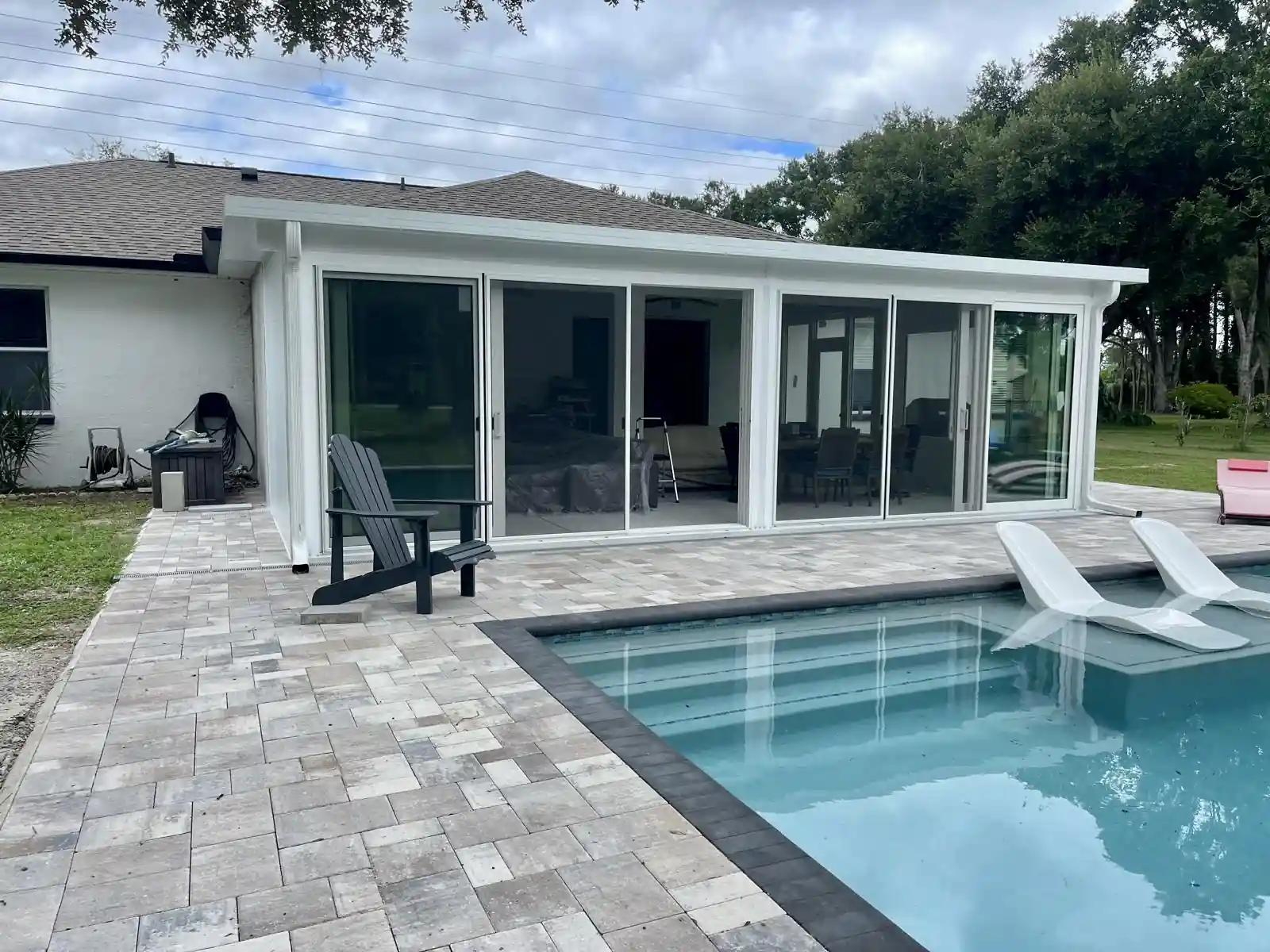
Short answer: A three-season sunroom encloses your porch with glass or vinyl panels but has no insulation or HVAC. A four-season sunroom adds insulation, Low-E insulated glass and heating and cooling. In Florida, choose a 3-season sunroom for sheltered afternoons or a 4-season sunroom for daily use, including cold mornings and summer days. Tampa Bay prices range from $12,000 to $30,000 for three-season rooms and $30,000 to $55,000+ for four-season rooms. Contract to completion takes 8 to 16 weeks; signing in October typically means finishing between mid-December and early February.
| Feature | Three-season sunroom | Four-season sunroom |
|---|---|---|
| What it is | An enclosed, unconditioned room | An insulated, conditioned room |
| Walls & glass | Aluminum-framed glass or vinyl panels; no insulation | Fully insulated with Low-E insulated glass |
| Heated-cooled | No HVAC | Dedicated mini-split or connection to the home’s HVAC |
| Code category | Unconditioned; see the three-season classification below | Conditioned; see the four-season classification below |
| Tampa Bay cost | $12,000 to $30,000 | $30,000 to $45,000 with a mini-split; $35,000 to $55,000+ connected to the home’s HVAC |
| Best for | Afternoons, weekends, dining and reading | Daily use, early mornings, late evenings and summer comfort |
What Is a Three-Season Sunroom?
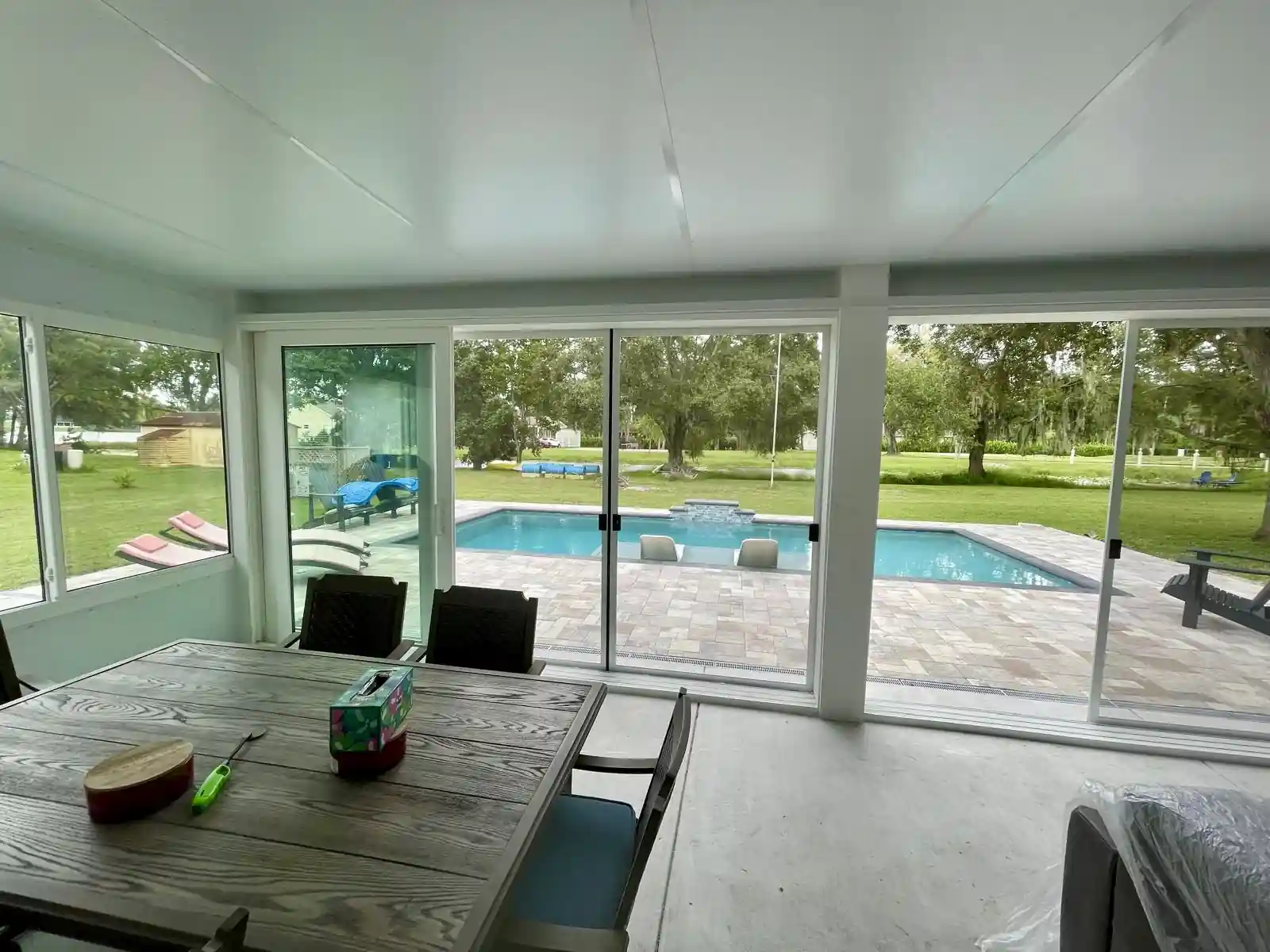
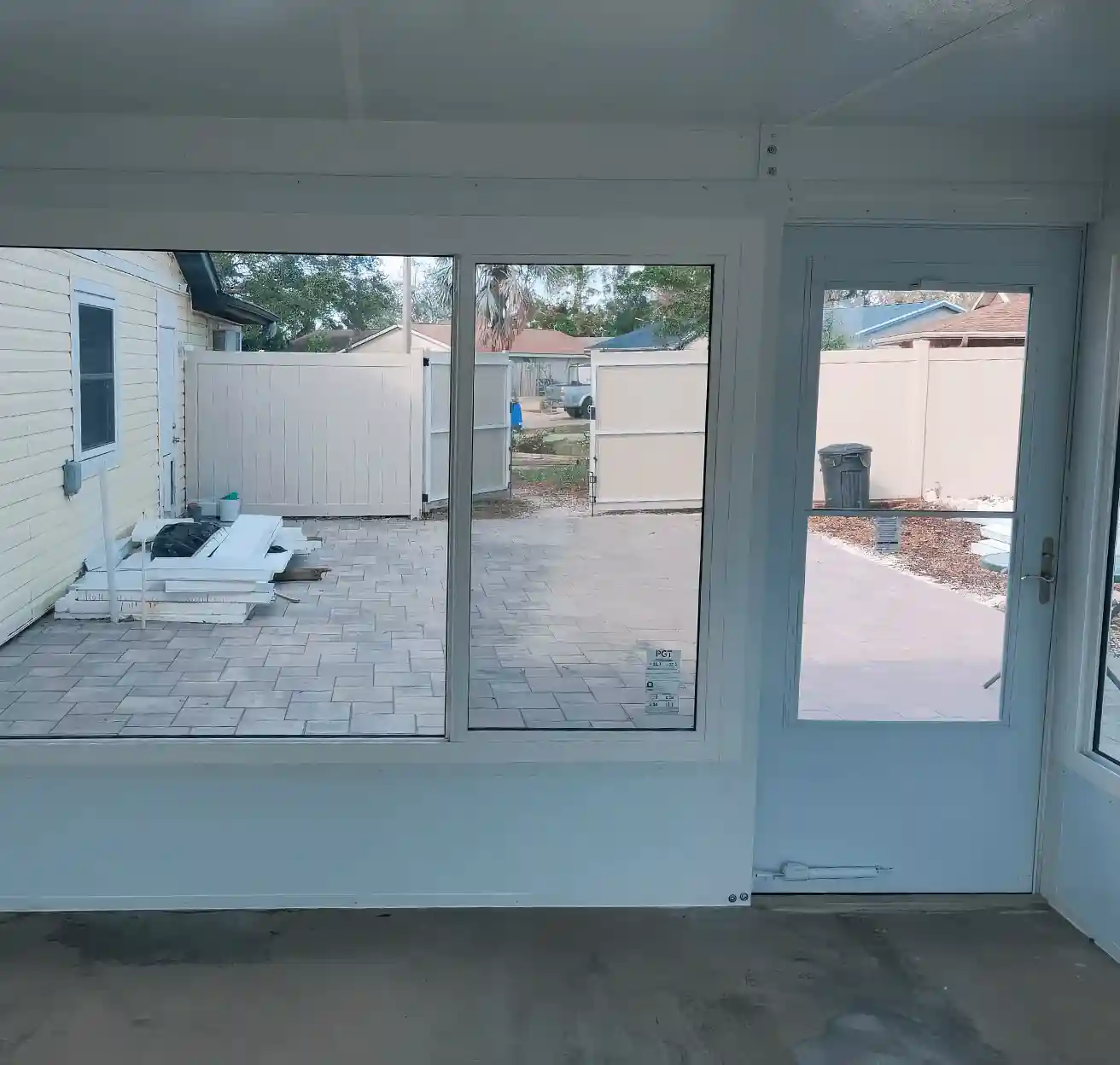
A three-season room gives you an enclosed space without heating or air conditioning. In Florida code terms, a three-season sunroom is typically permitted as a Category II or III sunroom. Aluminum-framed glass or vinyl panels block the wind and rain that can empty a screened lanai after a cold front.
In Tampa Bay, this room is comfortable from October through April and usable but warm in summer. It does not hold heat overnight. Think of it as a place for afternoon meals, reading and weekends when shelter from the weather is your main goal.
Three-season sunroom cost in Tampa Bay
Three-season sunroom cost ranges from $12,000 to $30,000. Typical planning ranges by room size are:
- $12,000 to $20,000 for 150 to 200 sq ft
- $18,000 to $30,000 for 250 to 350 sq ft
If you already know you will want heating or cooling, do not start here. Changing the category after the room is built is the expensive path (see the code section below).
What Is a Four-Season Sunroom?
A four-season room is fully insulated, with Low-E insulated glass and a heating and cooling system. In Florida code terms, a four-season sunroom with its own mini-split is typically a Category IV sunroom; one open to the house on the home’s HVAC is Category V.
A dedicated ductless mini-split controls the room independently. Mini-splits are the most common choice in Tampa Bay because they do not load the main system. An HVAC-connected room suits a project intended as a true room addition, open to your existing home.
A four-season sunroom, sometimes called an all-season sunroom, fits a home office used at 8 a.m., a gym or a playroom. It also fits anyone who wants the room available after sunset instead of waiting for a mild afternoon.
Four-season sunroom cost in Tampa Bay
- $30,000 to $45,000 with a mini-split for 150 to 250 sq ft
- $35,000 to $55,000+ connected to the home’s HVAC for 200 to 400 sq ft
These ranges compare different room sizes and HVAC arrangements, so do not treat the price difference as the cost of adding a mini-split alone. For a full cost breakdown for custom sunrooms in Tampa Bay, see our dedicated guide.
Three-Season vs. Four-Season Sunroom: Which One for Florida?
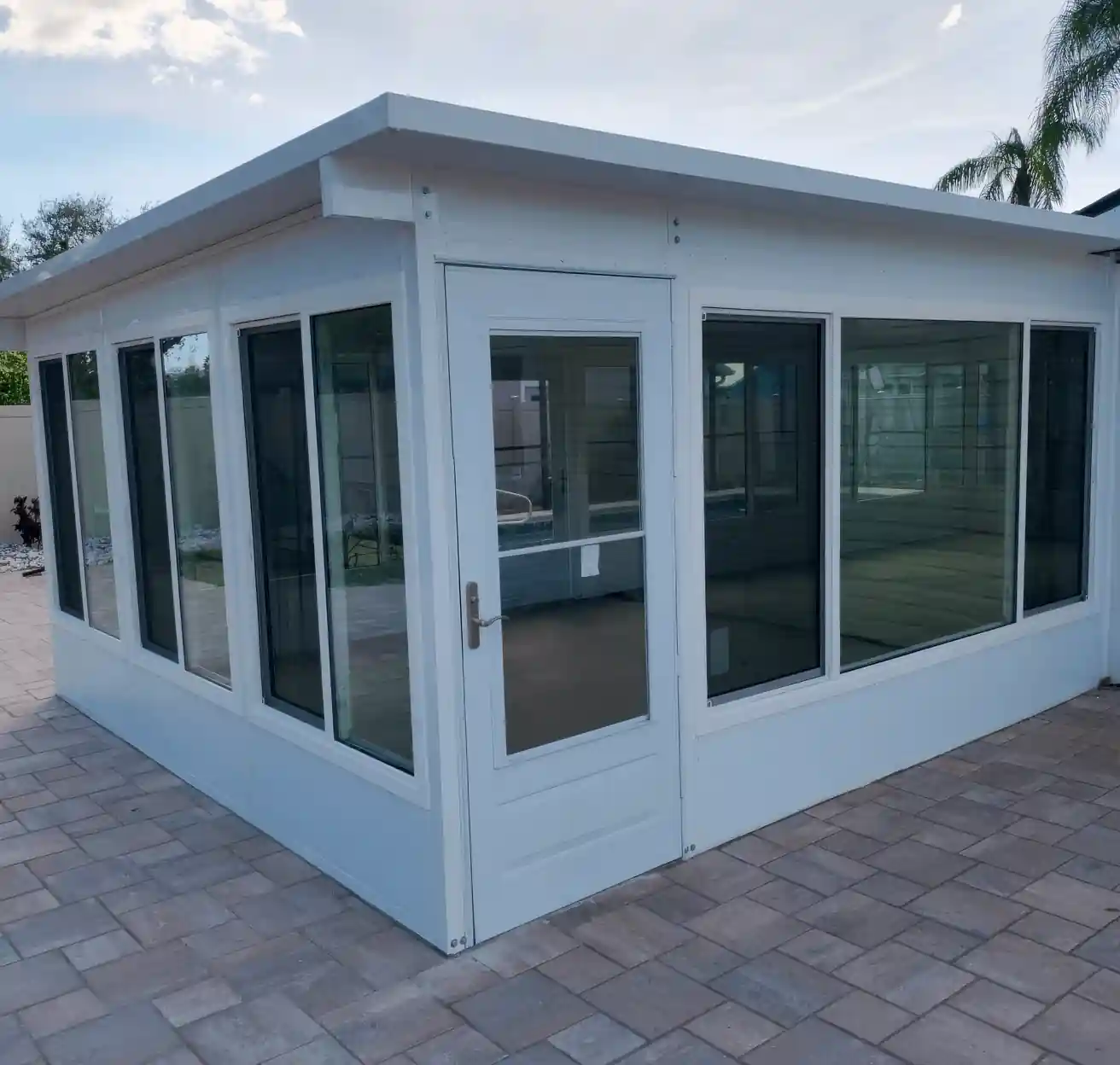
The main difference is temperature control. Both enclose the space, but only the four-season option is designed for heating and cooling. Start with when you want to use the room, then consider where you live.
- Choose three-season for sheltered afternoons. If wind and rain are your main obstacles, a glass enclosure may be enough, especially along the Pinellas coast.
- Choose four-season for a daily routine. A morning workspace or evening family room needs more than protection from the breeze.
- Plan for heat inland. Hernando, Polk and inland parts of Sarasota and Manatee had colder nights than coastal locations in the station records below.
Before you request a quote, describe an ordinary day in the room. Will you open it for lunch or work there early every morning? That answer matters more than the room’s name, and it is the first thing our three-season and four-season sunroom contractors in Tampa Bay will ask on site.
How Cold Does Tampa Bay Get? NOAA Records by County
Florida’s cool season brings mild afternoons, but evening comfort depends on where you live. From November 2025 to March 2026, Tampa International recorded 35 nights below 50°F and bottomed out at 29°F; Brooksville recorded 76 nights below 50°F and a low of 17°F. And the trend is colder nights, not warmer: at Tampa International, nights below 50°F went up every season for the last five, from 16 to 19, 25, 29 and 35. A screen keeps bugs out; it does not stop the evening chill or the wind behind a cold front.
The table shows NOAA daily station records for last season and the five seasons from November 2021 to March 2026. Use the station locations to understand the coastal and inland differences when choosing your room.
| Location (county) | Nights below 50°F, 2025-26 | Nights below 40°F, 2025-26 | Coldest night, 2025-26 | Nights below 50°F, last 5 seasons |
|---|---|---|---|---|
| St. Petersburg (Pinellas) | 14 | 1 | 36°F, Feb 1 | 4 to 15 |
| Sarasota-Bradenton Airport (Manatee) | 29 | 9 | 34°F, Feb 2 | 18 to 29 |
| Tampa International (Hillsborough) | 35 | 16 | 29°F, Feb 1 | 16 to 35 |
| Lakeland (Polk) | 44 | 19 | 24°F, Feb 1 | 22 to 44 |
| Myakka River State Park (Sarasota) | 60 | 33 | 26°F, Feb 3 | 31 to 66 |
| Brooksville, Hernando County Airport (Hernando) | 76 | 39 | 17°F, Feb 2 | 50 to 78 |
January 2026 highs averaged 72°F to 75°F across these stations. That is why afternoon use and early-morning use can lead to different recommendations. The question is whether shelter alone meets your needs or whether you want to set the room’s temperature.
What the Florida Residential Code Means for Your Room
The Florida Residential Code, Section R301.2.1.1.1, requires a sunroom category in the construction documents. The category reflects how the room will be enclosed and used. Discuss that intended use before the plans are prepared.
| Category | Walls | Heated or cooled? | Counted as living space? | What it means in the cool season |
|---|---|---|---|---|
| I | Open, insect screening, or thin plastic film | No | No | Keeps bugs out, not cold or wind |
| II | Glass or plastic | No | No | Blocks wind and rain; temperature follows the weather |
| III | Glass or plastic, plus air and water infiltration requirements | No | No | Tighter on windy, rainy front days |
| IV | Glass or plastic, thermally isolated from the house | Yes, with its own system | No | Heated and cooled on its own, with a door between it and the house |
| V | Glass or plastic, open to the house | Yes | Yes | A true room addition |
If you want heating or cooling, the room needs to be designed and permitted for it from the start. Changing the category later can mean meeting thermal-performance requirements the original glass and frame were never built for. Tell your contractor how you plan to use the room in January, not just in April.
Can Your Existing Lanai Become a Sunroom?
A lanai-to-sunroom conversion may let you keep the slab and roof you already paid for. With a solid roof and adequate framing, converting to glass costs $10,000 to $25,000 compared with $12,000 and up for a new build.
A free site visit tells you whether your structure qualifies. Most conversions are three-season rooms; a conversion designed as a four-season room needs the insulation and glass specified up front. See our patio and lanai enclosures page for what we typically start from.
Design Your Sunroom for Cool Evenings
- Plan lighting and outlets now. On December 21, the sun sets in Tampa at 5:39 p.m., almost three hours earlier than in June. Include lighting and power if you want to use the room after work.
- Choose glass for both seasons. Low-E insulated glass helps a four-season room hold its temperature through a cold snap and stay usable in August.
- Decide where the door to the house goes. A Category IV room keeps a door between it and the house; a Category V room opens to it. That decision changes the floor plan of your existing room.
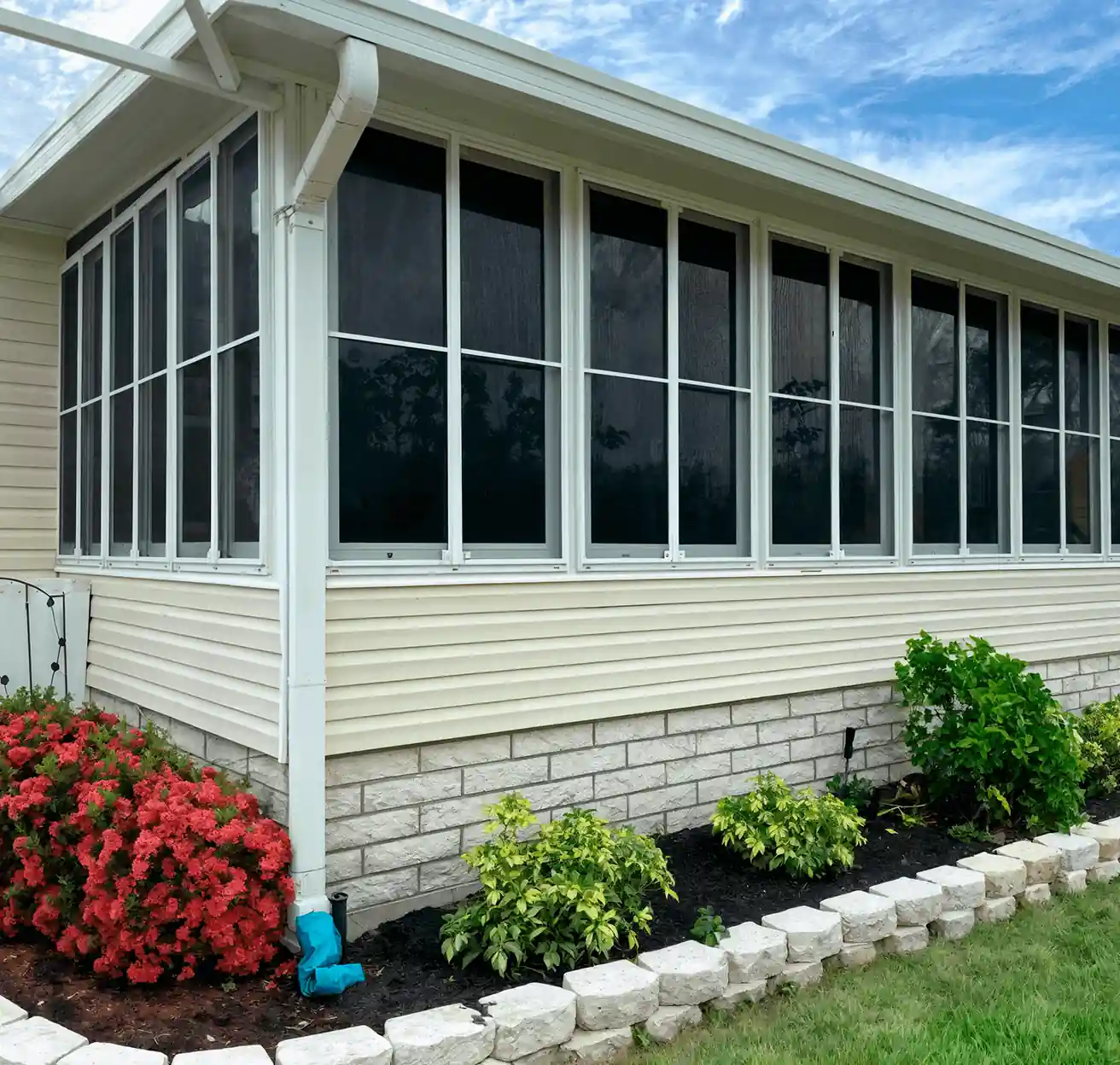
- Think about the view. Floor-to-ceiling panels facing the pool or the yard turn the cool season into the best view of the year from inside the house.
Fall Planning: When Will Your Sunroom Be Ready?
Plan on 8 to 16 weeks from contract to completion. Signed in mid-October, that typically means a finished room between mid-December and early February, with most of the cool season still ahead of you.
- Design and proposal: 1 to 2 weeks for on-site measurement and a written quote.
- Permit application: 1 to 3 weeks for engineered drawings submitted to the county.
- Permit approval: 2 to 6 weeks, depending on county workload. Hillsborough reviews typically take 3 to 6 weeks; Pinellas 2 to 4 weeks.
- Materials ordered: 1 to 2 weeks after approval.
- Installation: 3 to 7 days on site.
- Final county inspection: 1 to 2 weeks after installation.
A building permit is required in every Tampa Bay county. Unpermitted additions can create problems at resale and with homeowners insurance. Top Tier handles engineering, permit submittals, inspections and HOA approval as part of your project.
Frequently Asked Questions
What is a three-season room?
A three-season room is an enclosed space with aluminum-framed glass or vinyl panels, no insulation and no HVAC. It blocks wind and rain but does not hold heat overnight. In Tampa Bay, it suits afternoons, dining and reading, with comfortable use from October through April and warmer conditions in summer.
What is a four-season room?
A four-season room is a fully insulated sunroom with Low-E insulated glass and heating and cooling. It uses a dedicated ductless mini-split or a connection to your home’s HVAC. Choose it when you want a daily workspace, playroom or gym that you can use through cold mornings and summer weather.
What is the difference between a 3-season and a 4-season sunroom?
The main difference is insulation and temperature control. A three-season sunroom shelters you from wind and rain without HVAC. A four-season sunroom adds insulation, Low-E insulated glass and heating and cooling. Your choice depends on whether you want occasional sheltered use or a room for daily mornings and evenings.
How much does a three-season sunroom cost in Florida?
In Tampa Bay, three-season sunrooms cost $12,000 to $30,000. The range is $12,000 to $20,000 for 150 to 200 sq ft and $18,000 to $30,000 for 250 to 350 sq ft. These comparisons cover unconditioned rooms; choose a conditioned design if heating and cooling are part of your plan.
How much does a four-season sunroom cost?
A four-season sunroom with a mini-split costs $30,000 to $45,000 for 150 to 250 sq ft in Tampa Bay. A room connected to the home’s HVAC costs $35,000 to $55,000+ for 200 to 400 sq ft. Compare the room size and system arrangement together when reviewing those ranges.
Is a Florida room the same as a sunroom?
A Florida room is a regional name for a sunroom, typically an enclosed porch with glass or screen walls. In Tampa Bay, the terms are often used interchangeably. The name alone does not describe heating or cooling. Our sunroom, lanai and patio enclosure comparison explains the related terms.
Can I heat a three-season sunroom?
Not as built. A three-season sunroom is permitted as an unconditioned space (typically Category II or III under the Florida Residential Code). If you want to heat or cool the room, it should be designed and permitted as a four-season room from the start: Category IV with its own mini-split, or Category V if it opens to the house on the home’s HVAC.
How cold does it get in Tampa Bay in winter?
Afternoons stay mild, but nights vary by area. From November 2025 to March 2026, NOAA records show 14 nights below 50°F in St. Petersburg, 35 at Tampa International and 76 in Brooksville. Their lows were 36°F, 29°F and 17°F, respectively, making location important when choosing your enclosure.
Can I convert my lanai into a sunroom before winter?
Often, yes, if your lanai has a solid roof and adequate framing. Conversions typically cost $10,000 to $25,000. Allow 8 to 16 weeks from contract to completion with permitting. A mid-October signing typically means completion between mid-December and early February, so plan around that window.
Find the Right Sunroom for Your Florida Home
Top Tier Home & Building Solutions is a licensed Florida General Contractor (#CGC1527718) with 25 years of experience building sunrooms, lanais and screen enclosures. We serve Hillsborough, Pinellas, Pasco, Hernando, Manatee, Sarasota, Polk and Osceola counties.
- Engineering, permits and HOA coordination handled in-house
- Up to 10-year warranty
- 0% financing for qualifying projects
- End of the Season Sale: 20% off all services through November 30, 2026
Top Tier works with Foundation Finance and GreenSky, including 0% interest options for qualifying projects and approved applicants. Review our sunroom financing options as you plan.
Request your free sunroom estimate or call (813) 531-7170. We measure on site and help you choose a room that fits how you will use it.
Related reading: Custom sunrooms in Tampa Bay: cost, types and timeline · Sunroom vs. lanai vs. patio enclosure · Patio and lanai enclosures