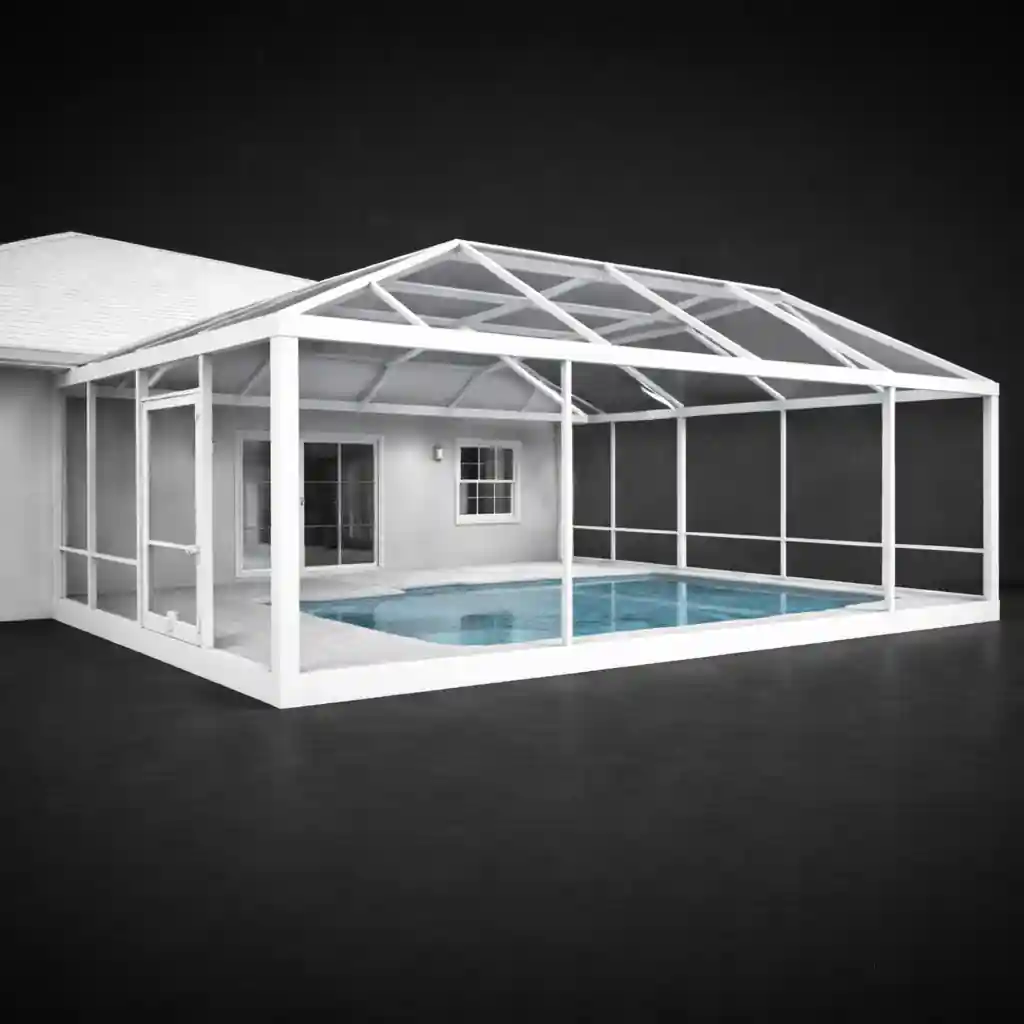
Quick answer: A pool cage is a tall screened structure with its own roof built over a pool; a screen enclosure is the umbrella term that also covers lower lanai and patio screens attached to the house; a bird cage is a tall open-air screened structure that may have no pool at all. If it has a screened roof over the pool, people call it a pool cage. Cost is the fastest way to tell them apart: lanai and patio screens start around $4,000, pool cages around $8,000.
| Pool cage | Lanai / patio screen enclosure | Bird cage | |
|---|---|---|---|
| What it covers | The pool and deck | A patio or lanai attached to the house | A large open area, pool optional |
| Roof | Screened roof, hip or mansard | Often the home’s existing solid roof | Screened roof, high peak |
| Typical height | 8–20 ft | 8–10 ft | 15–30 ft |
| Permit required | Yes | Yes | Yes |
| Typical cost | $8,000–$25,000 | $4,000–$12,000 | $4,000–$25,000+ |
Florida homeowners frequently use “screen enclosure” and “pool cage” interchangeably — but they’re not the same thing. Understanding the difference between a screen enclosure and a pool cage helps you choose the right product, budget correctly, and get the right contractor. This guide explains the key distinctions and helps you decide which is right for your Florida home.
What Is a Pool Cage?
A pool cage is an aluminum-framed, fully screened enclosure that surrounds your swimming pool and pool deck. It connects to the back of the house and is designed specifically to keep insects, debris, and animals out of the pool, reduce UV exposure for swimmers, meet Florida building codes for wind-load resistance, and provide a covered but ventilated outdoor space.
Pool cages are typically taller than other enclosure types to accommodate water features, diving boards, or pool slide structures. See our professional pool cage contractors for details on what we offer in Tampa Bay.
What Is a Screen Enclosure?
A screen enclosure is a broader category that includes any aluminum-framed screened structure attached to or surrounding a living space. This includes lanai enclosures (covering an existing concrete slab patio area), bird cage enclosures (tall, open-air screened rooms), Florida room conversions, and pool cages. Every pool cage is a screen enclosure, but not every screen enclosure is a pool cage.
Key Differences: Pool Cage vs. Screen Enclosure
Height and Clearance
Pool cages must be tall enough to comfortably clear the pool and any equipment — typically 10–16 feet at the peak. Standard lanai or patio enclosures are often 8–10 feet. If your project involves a pool, you need pool-cage-height engineering and the framing to match.
Engineering and Permits
Pool cages require wind-load engineering calculations specific to pool structures in Florida. In Tampa Bay, all pool cages require a building permit. General screen enclosures for covered patios may have different permit thresholds depending on county and square footage.
Cost Comparison
- Pool cage: $8,000–$25,000
- Patio/lanai screen enclosure: $4,000–$12,000
- Bird cage enclosure: $4,000–$25,000+
Insurance Implications
Pool cages may lower your homeowners insurance premium by reducing the liability associated with an open pool. A basic screen enclosure around a patio typically doesn’t affect insurance in the same way. Always check with your insurer before and after installation.
Which Is Right for Your Florida Home?
Choose a Pool Cage If:
- You have a swimming pool you want to protect from debris and insects
- You want to reduce pool maintenance time and chemical costs
- You’re in a high-insect area or near a wooded lot
- You want to extend the usability of your pool into cooler months
Choose a Screen Enclosure (Lanai or Bird Cage) If:
- You want to enclose a patio or outdoor seating area without a pool
- You want a tall, open-feeling outdoor room
- You’re looking to add screened living space without full pool coverage
Learn more about our bird cage and screen enclosure services for options beyond the traditional pool cage.
Can You Have Both?
Yes — many Florida homes combine a pool cage with an adjacent screened lanai. These can be built as a single connected structure or phased over time. A combined project often saves on mobilization and permitting costs versus two separate projects.
Frequently Asked Questions
Is a pool cage the same as a bird cage in Florida?
No. A bird cage is a tall, open-roof screen enclosure typically used for garden or patio spaces. A pool cage is specifically designed to enclose a pool and must meet different engineering standards.
Do I need a permit for a screen enclosure in Hillsborough County?
Yes, for most screen enclosures. A permit is always required for pool cages. For patio screen enclosures, permit requirements depend on square footage and structural attachment to the home.
How long does a screen enclosure last in Florida?
The aluminum frame typically lasts 20–30 years. The screen panels last 10–15 years before re-screening is needed due to UV degradation and storm wear.
Who installs screen enclosures in Tampa Bay?
Top Tier Home & Building Solutions installs pool cages, lanai enclosures, and bird cage structures across Hillsborough, Pinellas, Pasco, Hernando, Sarasota, and Manatee counties.
Not sure which enclosure type fits your project? Contact us for a free consultation — we’ll assess your space and recommend the right solution for your home and budget.
Related: Replacing or rescreening an existing pool cage — what each costs and how to tell which one you need. See also our pool cage companies serving Tampa Bay and Sarasota.
Sources: Florida Building Code — Residential (FBCR); Hillsborough County Permit Requirements.